A small leak in a clubhouse roof may not seem particularly urgent. Neither does a crack in the parking lot or an irrigation system that occasionally malfunctions. But when these problems go unaddressed, they have a way of becoming much more expensive than anyone anticipated.
For homeowners associations, the maintenance schedule is one of the most important responsibilities a board oversees. Community amenities, roads, buildings, landscaping, and infrastructure all require attention, and waiting until something breaks can put unnecessary pressure on the association’s finances.
A preventive maintenance plan helps HOA boards stay organized when taking care of community assets. By doing regular inspections, scheduling service, and making repairs on time, associations can avoid emergencies, help equipment last longer, and better plan for future costs.
Kuester Management Group provides HOA management services in Myrtle Beach SC, Charlotte NC, Huntersville NC, Wilmington NC, and Fort Mill SC. Keep on reading to learn how to protect your community association’s assets and keep costs low long-term.
What is Preventative Maintenance for an HOA?
Preventative maintenance involves inspecting, servicing, and repairing community assets before significant problems develop. Rather than waiting for equipment to fail, the association follows a schedule designed to keep its property in good working condition.
For example, a preventative maintenance plan might involve having a roofing contractor inspect a clubhouse roof annually, clearing drainage systems before heavy rainfall, or scheduling regular HVAC servicing.
Reactive maintenance works differently. Repairs begin after something stops functioning, often leaving the HOA board with limited time to evaluate contractors, compare costs, or plan for the expense.
While preventive maintenance cannot eliminate every emergency, it can reduce the likelihood of avoidable failures and give the association greater control over its maintenance budget.
Why Preventive Maintenance Matters
Of course, every HOA wants to protect its shared property and finances… that just makes good operational and financial sense. After all, replacing equipment too soon or paying for emergency repairs can impact the operating budget, reserve funds, and even homeowner assessments.
Regular maintenance schedules can help a community association:
- Extend the useful life of equipment and infrastructure.
- Identify deterioration before it becomes extensive.
- Reduce avoidable emergency repairs.
- Maintain safer common areas and amenities.
- Preserve the appearance and appeal of the neighborhood.
- Make maintenance expenses more predictable.
- Support long-term reserve planning.
Homeowners benefit too. When common areas are well maintained, the community becomes more desirable, property values are supported, and there are fewer disruptions from unexpected repairs.
Start With the HOA’s Maintenance Responsibilities
Before creating a preventive maintenance schedule, boards should determine exactly which assets the association is responsible for maintaining.
Review the community’s CC&Rs, bylaws, maintenance agreements, plat maps, vendor contracts, warranties, and developer documentation where applicable.
Responsibilities vary considerably. One association may maintain building exteriors and roofs, while another may leave those obligations entirely to individual property owners.
The maintenance program should reflect the governing documents rather than assuming that every HOA maintains the same property.
Create an Inventory of Community Assets
Once you know your responsibilities, make a master list of the assets the HOA maintains.
Depending on the community, this may include:
- Clubhouses, roof inspections, and HVAC systems
- Swimming pools, playgrounds, and fitness facilities
- Roads, parking lots, and sidewalks
- Stormwater systems and drainage infrastructure
- Landscaping, trees, and irrigation
- Gates, fences, and retaining walls
- Streetlights and common area lighting
- Shared plumbing, electrical systems, and security equipment
For each asset, write down its location, approximate age, condition, warranty details, maintenance history, expected lifespan, and the contractor in charge.
This information helps board members see what needs attention and makes sure important maintenance tasks aren’t missed when leadership changes.
Identify the Maintenance Each Asset Requires
Different community assets need different types of care. The goal is to set up practical maintenance activities based on the property’s condition, how it’s used, and what the manufacturer recommends.
Buildings & Roofing
Schedule regular roof inspections, clear gutters and drainage areas, and fix minor leaks or damaged flashing before water gets inside. Also check exterior walls, doors, windows, and other building parts for signs of wear.
HVAC & Mechanical Equipment
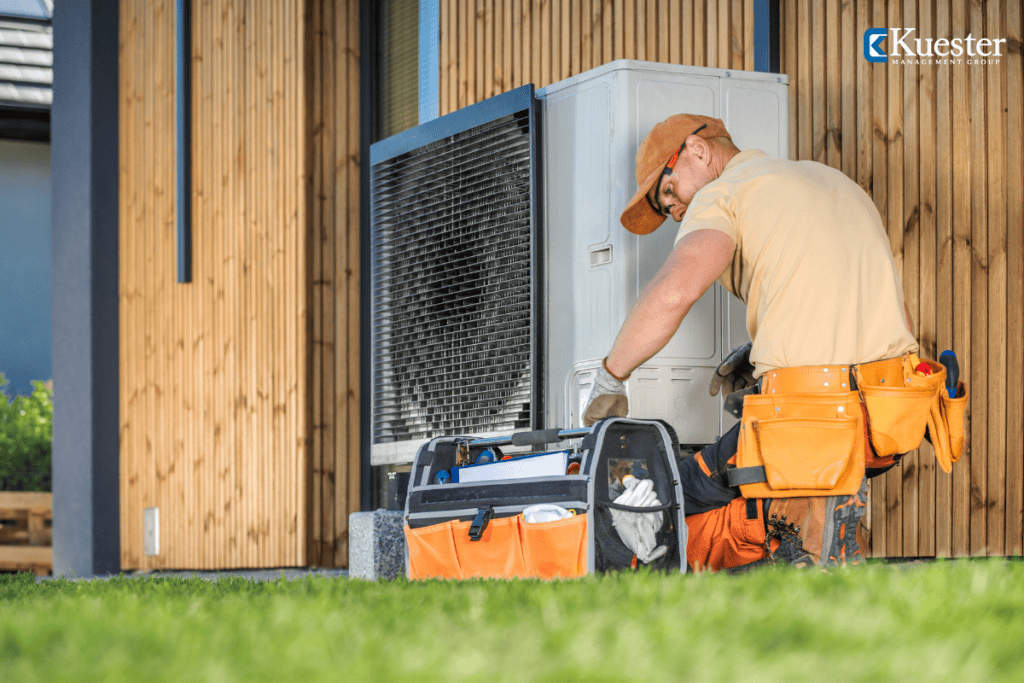
Professional servicing, changing filters, cleaning equipment, and regular inspections help HVAC systems run well. Other mechanical equipment, like pumps and shared plumbing, should be maintained as professionals recommend.
Roads & Parking Areas
Inspect pavement for cracks, potholes, drainage issues, and worn surfaces. If the board fixes small problems early, you can prevent bigger repairs, especially where water can get in and cause more damage.
Swimming Pools & Amenities
Pools need regular equipment servicing, pump checks, safety inspections, and care for surfaces and nearby areas. Playgrounds, fitness equipment, and other recreational facilities should also be checked for wear and possible hazards.
Landscaping & Irrigation
Finally, by conducting regular irrigation checks, the HOA board can spot leaks and broken equipment before they harm landscaping or waste water. Checking trees, pruning, inspecting drainage, and watching for pests or disease also help protect common areas.
Establish a Realistic Maintenance Schedule
A maintenance plan is incredibly useful when inspections and services are assigned on specific dates or at planned intervals.
Think about it like this: some tasks need weekly attention, while others can be done monthly, quarterly, semiannually, annually, or after severe weather. Some equipment may have manufacturer-recommended service intervals that should come before a general schedule.
How often you do preventative maintenance should depend on the asset’s condition, age, usage, climate, warranty requirements, and professional advice. For example, a busy community pool will need more attention than a small entrance monument.
Sample HOA Preventative Maintenance Calendar
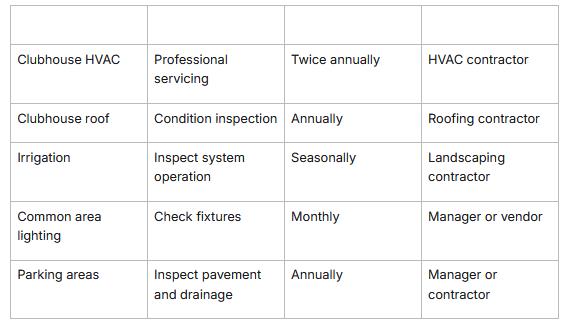
The board can expand this calendar to include the date each task was completed, the next scheduled service, inspection findings, and any repairs that require follow-up.
These frequencies are examples. Each association should establish its schedule based on actual property conditions and applicable requirements.
Prioritize Maintenance Based on Risk
When maintenance budgets are tight, boards need a practical way to decide which projects should come first.
Safety hazards should be addressed right away, followed by water intrusion, drainage problems, structural issues, and other conditions that could cause major damage.
High-value equipment and often-used amenities should also be watched closely, since failures can be costly or disruptive.
Routine cosmetic upkeep is still important, but it shouldn’t come before problems that threaten safety or could impact property value.
Assign Responsibility and Hold Vendors Accountable
A maintenance schedule accomplishes little if no one is responsible for carrying it out.
Each task should identify who arranges the service, who performs the work, and who verifies completion. Depending on the community, those responsibilities may involve the HOA board, community manager, maintenance staff, landscaping contractor, pool company, or another specialized provider.
Vendor contracts should clearly establish the scope of services, frequency, reporting expectations, and procedures for addressing problems.
Board members should also periodically evaluate contractor performance rather than automatically renewing agreements without reviewing whether the promised work was completed.
Keep Accurate Maintenance Records
Keeping good records helps the board see how an asset has been maintained and whether ongoing problems need more attention.
Useful records include inspection dates, photos, vendor reports, completed services, repair invoices, warranties, work orders, and recommended follow-up actions.
Storing this information securely in one place makes it easier to review repair histories, plan future projects, and keep things running smoothly when board members or management companies change.
It also helps the HOA board tell the difference between a one-time equipment problem and a pattern that might need a new maintenance approach.
Connect Preventive Maintenance With the HOA Budget
Preventive maintenance should be part of the association’s annual financial planning rather than an expense addressed only when something needs repair.
Recurring costs like roof inspections, HVAC servicing, landscaping, and routine equipment maintenance should be part of the operating budget. Boards should look at past expenses, current vendor contracts, and expected service needs when planning the next year’s budget.
Major repairs and replacements require a longer-term perspective.
An HOA reserve study estimates when significant community assets may need repair or replacement and helps determine how much the association should set aside to cover those expenses. The preventive maintenance program supports that plan by helping protect assets throughout their useful lives.
Information gathered during inspections can also reveal whether a component is deteriorating faster than expected, allowing the board to revisit project timelines and funding assumptions.
These two planning tools should work together. Regular maintenance helps preserve assets, while reserve study planning prepares the community for expenses that maintenance cannot prevent indefinitely.
Account for Seasonal Maintenance Needs
Maintenance priorities change as the calendar flips from one month to another, and the schedule should match local weather conditions.
In spring, you might need to inspect irrigation, work on landscaping, prepare pools, and check for winter storm damage. Summer often means paying closer attention to pools, irrigation, and cooling equipment.
Fall is a good time to take care of gutters, drainage systems, trees, and equipment that needs to be ready for colder weather. Winter maintenance may include freeze protection, heating systems, storm preparation, and planning projects for the next year.
Communities near the coast may also need to plan for hurricane inspections and preparation, while inland properties may have other weather concerns.
Give Homeowners a Way to Report Problems
Residents often notice maintenance issues before they appear on a scheduled inspection.
An accessible reporting process allows homeowners to alert the association to broken lights, irrigation leaks, damaged sidewalks, fallen branches, malfunctioning gates, or drainage problems.
Reports should be documented, assigned, and tracked through completion. Homeowners should also receive reasonable communication about planned work that may affect access to amenities, parking, or other shared spaces.
Resident reporting complements regular inspections, but it should never replace them.
Review the Maintenance Plan Every Year
An effective maintenance program changes as the community ages.
At least annually, boards should review whether scheduled tasks were completed, which assets required unexpected repairs, whether vendors met expectations, and how maintenance costs are changing.
This review is also an opportunity to incorporate new amenities, adjust inspection frequencies, and account for projects identified through the reserve study.
Common mistakes include relying on board members’ memories, failing to document completed work, postponing minor repairs, and treating maintenance scheduling and financial planning as unrelated responsibilities.
A consistent annual review helps prevent those habits from becoming part of the community’s operations.
How Professional HOA Management Supports Preventative Maintenance
Developing a maintenance plan is one responsibility. Keeping inspections, contractors, work orders, budgets, and homeowner communications organized throughout the year is another.
For volunteer boards, that workload can become difficult to manage alongside other association responsibilities.
Kuester provides professional HOA management that can help communities establish structured preventive maintenance programs, coordinate inspections, oversee vendors, track completed repairs, and connect maintenance needs with annual budgeting and reserve planning.
Having experienced support also creates continuity when board membership changes, ensuring that important maintenance schedules and project records do not disappear during leadership transitions.
Protect Your Community With a Better Maintenance Plan
Preventive maintenance gives HOAs an opportunity to address problems while they are still manageable, protect shared assets, and make more informed decisions about future spending.
The most effective programs combine regular inspections, qualified vendors, accurate records, clear responsibilities, and financial planning. When those elements are consistently managed, boards can spend less time responding to avoidable emergencies and more time planning for the community’s future.
If your HOA needs help organizing maintenance responsibilities, coordinating contractors, or developing a more consistent approach to property upkeep, contact Kuester to learn how our team can support your community’s maintenance and long-term planning needs.
We invite you to reach out today and schedule a 1:1 consultation.
FAQs
What is preventive maintenance in an HOA?
Preventive maintenance involves scheduled inspections, servicing, and minor repairs intended to keep shared community assets functioning properly and identify problems before significant damage occurs.
Why is preventive maintenance important for an HOA?
It helps protect community assets, reduce avoidable emergency repairs, support resident safety, maintain common areas, and improve financial planning.
What is the difference between preventive and reactive HOA maintenance?
Preventive maintenance is scheduled before a major problem occurs. Reactive maintenance addresses an issue after equipment fails or damage develops.
What should be included in an HOA preventive maintenance plan?
The plan should include an asset inventory, inspection schedules, maintenance tasks, assigned responsibilities, vendor information, documentation procedures, and budget considerations.
How do you create an HOA preventive maintenance schedule?
Identify the assets the association maintains, review their service requirements, establish appropriate inspection intervals, assign responsible parties, and record the tasks on a maintenance calendar.
How often should an HOA perform preventive maintenance?
Frequency depends on the asset, its condition, usage, manufacturer recommendations, climate, and applicable requirements. Some services occur weekly or monthly, while others may be seasonal or annual.
What common areas require preventive maintenance?
Common examples include clubhouses, pools, playgrounds, roads, sidewalks, landscaping, irrigation, lighting, gates, drainage systems, and shared mechanical equipment.
Who is responsible for HOA preventive maintenance?
The board oversees the association’s responsibilities, while community managers, maintenance staff, and qualified contractors may coordinate or perform the work.
How does preventive maintenance help an HOA save money?
Identifying minor problems early can help prevent more extensive damage, extend equipment life, and reduce avoidable emergency repair expenses.
How does preventive maintenance affect property values?
Well-maintained common areas and amenities can contribute to neighborhood appearance, resident satisfaction, and the overall desirability of the community.
How should an HOA budget for preventive maintenance?
Boards should include recurring inspections and servicing in the annual operating budget while using reserve planning to prepare for significant future repairs and replacements.
What is the relationship between preventive maintenance and an HOA reserve study?
A reserve study estimates future major repair and replacement needs. Preventive maintenance helps care for those assets during their useful lives and provides information that can inform reserve projections.
Should an HOA keep records of inspections and repairs?
Yes. Records help track maintenance history, verify completed work, evaluate vendors, support budgeting, and provide continuity as board membership changes.
How often should an HOA review its preventive maintenance plan?
At least annually, and whenever significant changes occur in asset condition, community amenities, maintenance costs, or vendor responsibilities.
How can an HOA management company help with preventive maintenance?
A management company can coordinate inspections, develop maintenance schedules, oversee vendors, track work orders, maintain records, support budgeting, and help boards plan for future community maintenance needs.