
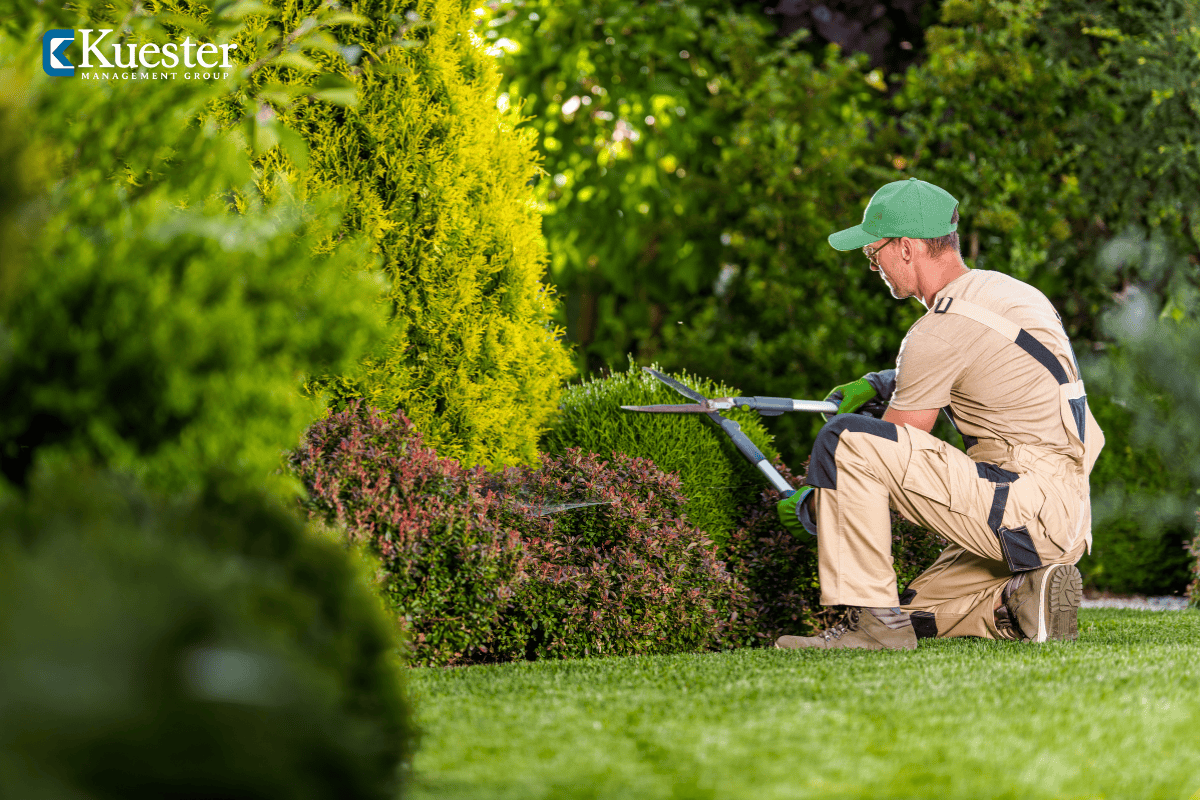
When an HOA board of directors steps in to maintain a community association, there is usually more to handle than most people expect. Tasks like landscaping, pest control, fixing sidewalks, dealing with irrigation issues, swimming pool care, and old equipment can quickly fill up meeting agendas, especially while board members are still getting familiar with how things work.
For new communities or those moving away from developer control, it can be hard to know where to start. What does the HOA actually take care of? How often should common areas be checked? Who reaches out to contractors when something needs fixing, and how does the board make sure the job gets done?
An HOA maintenance checklist is a good place to start. Even more, it helps the board set up a regular way to handle inspections, routine upkeep, repairs, and long-term planning. This way, issues can be caught early before they turn into costly emergencies.
Kuester Management Group is a leading provider of HOA management company in Charlotte NC, Myrtle Beach SC, Huntersville NC, Wilmington NC, and Fort Mill SC. In this blog, we offer step-by-step advice on creating an HOA maintenance checklist.
What is an HOA Maintenance Checklist?
An HOA maintenance checklist is a clear record of the common property and infrastructure the community association must maintain. It shows what needs attention, when inspections, maintenance work, or service should happen, who is responsible, and if any follow-up work is needed.
A useful checklist should answer six questions:
- What needs to be maintained?
- How often should it be inspected?
- Who is responsible?
- What is its current condition?
- What repairs or services are needed?
- When was the work completed?
The checklist should align with the needs of your community association. For example, a neighborhood with private roads, a swimming pool, security cameras, and a clubhouse will have different maintenance tasks than one with just entrance landscaping and a small common area.
First, Determine What the HOA Is Responsible For
Before planning inspections or hiring contractors, new board of directors should look over their governing documents to understand exactly where the homeowners association’s maintenance duties start and stop.
Start with the community’s covenants, conditions, and restrictions (CC&Rs), bylaws, plat maps, maintenance agreements, developer turnover documents, warranties, and existing vendor contracts.
These records help make it clear which assets belong to the association, which are taken care of by homeowners, and which responsibilities are shared. For example, an HOA might handle community landscaping in common areas or green spaces but not private yards. In another community, the association could be in charge of exterior elements related to building maintenance.
Understanding these differences helps avoid unnecessary spending and cuts down on arguments about who should arrange and pay for repairs.
Build an Inventory of Community Assets
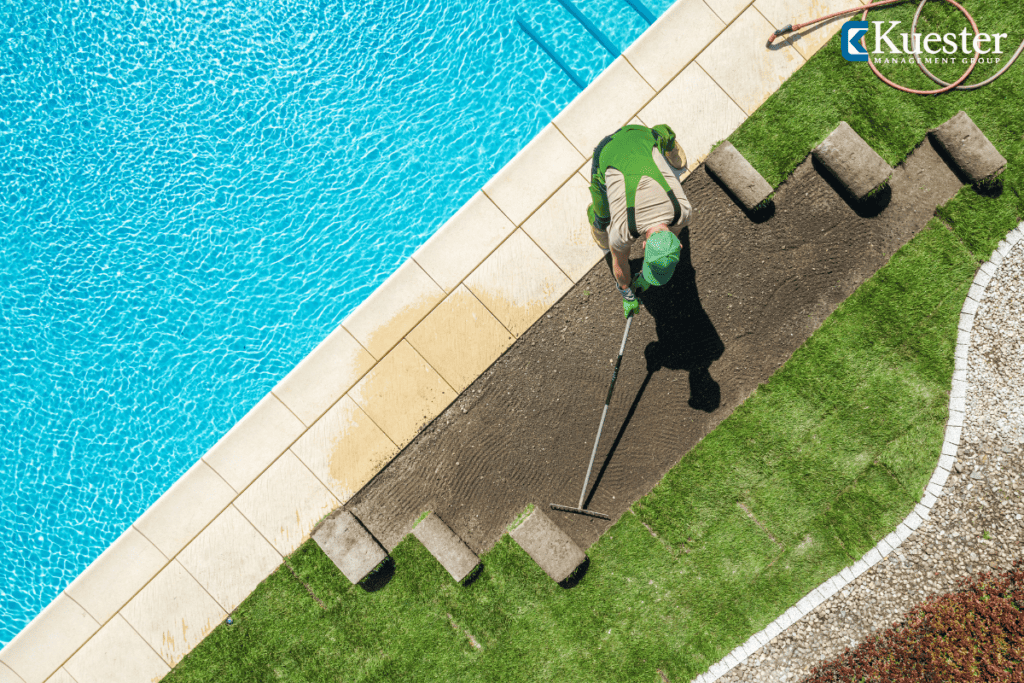
Once responsibilities are clear, walk through the property and make a list of the assets the HOA maintains. Write down each item’s location, approximate age, current condition, maintenance needs, and any contractor already responsible for it.
This inventory forms the basis for the maintenance schedule. It also helps new board members understand the community’s physical assets without having to gather that information again each time the board changes.
Landscaping and Grounds
Landscaping is often one of the most noticeable HOA responsibilities, and small problems can develop quickly if regular care is missing.
Include the following in your grounds maintenance checklist:
- Lawn mowing, edging, and weed control
- Tree and shrub trimming
- Irrigation operation and leaks
- Mulch and planting bed upkeep
- Dead or damaged trees
- Drainage and erosion
- Fallen branches and storm debris
- General common area cleanliness
Schedule additional inspections after the community experiences severe weather, especially if heavy rain or strong winds might have damaged trees, drainage areas, or irrigation equipment.
Roads, Sidewalks, and Parking Areas
Pavement and walkways need regular attention, even if they look fine. Small cracks, drainage problems, and uneven surfaces can get worse with use and weather.
Boards should look for potholes, cracked pavement, uneven sidewalks, damaged curbs, faded parking lines, worn speed bumps, blocked drains, and missing or damaged signs.
Be sure to include accessible parking areas and walkways. If you find any immediate safety concerns, address them right away instead of waiting for the next routine asphalt maintenance.
Building and Exterior Structures
If your homeowners association is responsible for the upkeep associated with clubhouses, common areas, or shared building exteriors, inspections should cover roofs, gutters, downspouts, siding, paint, doors, windows, foundations, stairs, outdoor handrails, satellite dishes, fences, and retaining walls.
Look out for water leaks, worn materials, loose parts, and any visible structural problems. Board members can note what they observe, but specialized inspections and repairs should be done by qualified professionals during a safety check.
Community Amenities
Community pools, children’s playgrounds, workout or fitness centers, green spaces, sports courts (i.e., basketball courts, pickleball courts, etc.), dog parks, walking trails, and clubhouses all need maintenance that fits their use and equipment.
Be sure to monitor for cleanliness, wear, damaged surfaces, access points, safety features, and equipment condition. Swimming pools and fitness equipment may need professional servicing on a set schedule, while playgrounds and recreation areas benefit from regular checks for damage or hazards.
Lighting, Gates, and Security
Routinely check common area lighting, entrance gates, access controls, security cameras, locks, and emergency lights.
Remember, a broken gate or a poorly lit walkway can impact community residents long before anyone files a formal complaint. Including these systems in regular property walkthroughs helps you uncover potential problems sooner.
Utilities and Mechanical Equipment
Depending on a community association’s makeup, the HOA may maintain HVAC systems, pumps, irrigation controls, shared plumbing, electrical equipment, stormwater infrastructure, elevators, or fire safety systems.
These components often have manufacturer-recommended service intervals or specific inspection needs. Licensed and qualified contractors should handle technical maintenance, testing, and repairs instead of relying on volunteer board members.
Create a Maintenance Schedule That People Can Follow
Knowing what needs maintenance is just the first step. The HOA board also needs a calendar to schedule when to do the work.
Some tasks need weekly attention, while others are done monthly, quarterly, semiannually, annually, or seasonally. You may also need extra inspections after storms or if equipment shows signs of trouble.
For example, landscaping may need weekly service during the growing season, common area lighting might be checked each month, and the sidewalks of shared living spaces could get a thorough review every quarter. Professional roof inspections and mechanical servicing should follow the right recommendations and property conditions.
The schedule should match the association’s resources and be updated when vendors, amenities, or maintenance needs change.
Prioritize Repairs Based on Urgency
Not every maintenance issue requires spending ASAP. It’s better to set priorities, which helps the board handle serious concerns first and plan less urgent work based on available funds.
A practical way to manage this is to sort issues into four categories:
- Immediate: Safety hazards, significant water intrusion, electrical concerns, or other urgent risks.
- Short-term: Problems requiring attention soon, such as deteriorating pavement or malfunctioning irrigation.
- Routine: Recurring preventive services, inspections, and minor upkeep.
- Long-term: Major repairs or replacements that should be incorporated into capital planning.
This system helps make sure smaller concerns are not forgotten and urgent problems are not overlooked because of routine maintenance requests.
Assign Responsibility and Track the Work
A maintenance task without an assigned person can go unresolved for months. Every checklist item should show who is responsible for arranging, doing, and confirming the work.
Depending on the situation, that may be a community manager, landscaping company, maintenance contractor, specialty vendor, or board representative.
Use a simple work order system to track when an issue was found, what action was requested, who got the assignment, and when the repair was finished. Photos, inspection notes, contractor invoices, and follow-up reports are helpful for documentation.
These records are especially helpful when the board needs to review vendor performance, plan future budgets, or explain past repairs to new members.
Connect Maintenance Planning to the HOA Budget
Maintenance and financial planning should go hand in hand. Routine services like landscaping, scheduled inspections, and minor repairs usually belong in the annual operating budget.
Bigger future repairs and replacements may need reserve funding. A reserve study helps the association estimate when major components will need attention and how much money to set aside over time.
For example, routine swimming pool servicing may be an operating expense, while replacing major pool equipment could be part of the reserve plan. The right classification depends on the association’s policies and financial needs.
Boards should also make an effort to review maintenance costs during annual budgeting and include recurring services, expected repairs, and upcoming capital projects. Preventive maintenance can help assets last longer, but you still need to plan for eventual replacement.
A Practical HOA Maintenance Checklist Template
The following sample can help a new board start organizing its maintenance responsibilities.
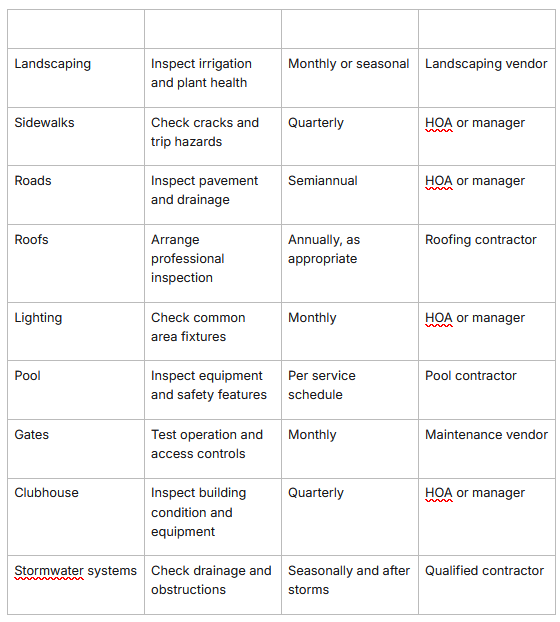
When using the checklist, add columns for condition, action required, inspection date, completion date, and notes.
These are suggested starting intervals, not universal rules. Your HOA should adjust the schedule based on its governing documents, property type, climate, equipment, requirements, and professional advice.
Review and Update the Checklist Every Year
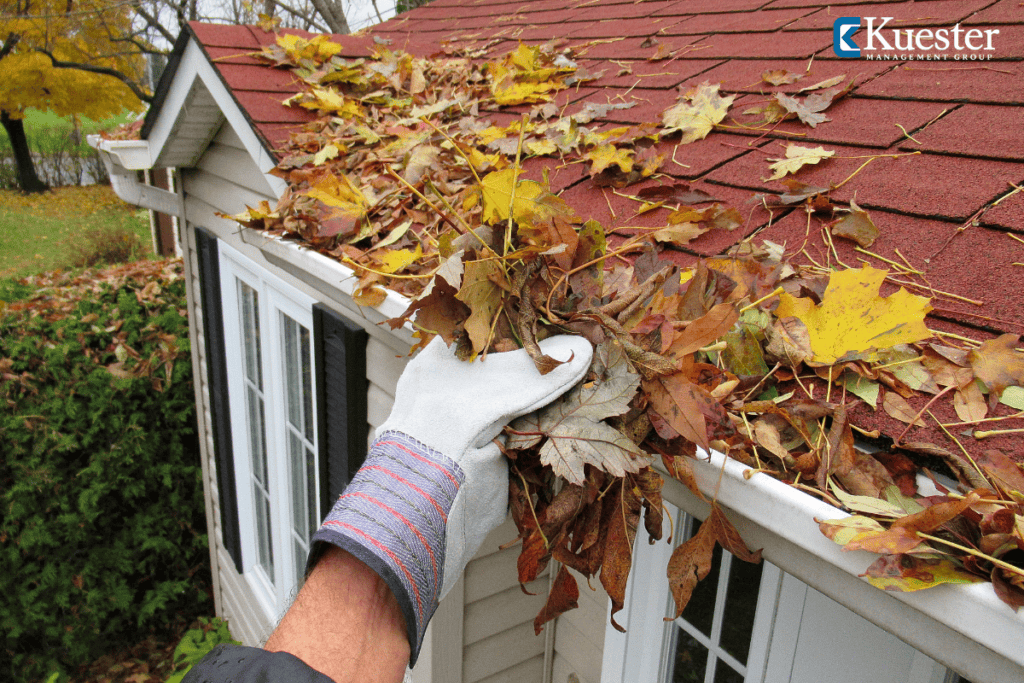
Community maintenance requirements and needs change over time. Equipment will age, landscaping will mature, amenities are added, and small issues can turn into big problems.
At least once a year, review the asset inventory, maintenance calendar, vendor responsibilities, completed repairs, and upcoming projects. Use this information to adjust the schedule and spot expenses that should go into the next budget.
A maintenance checklist should stay as a working document that changes as the community grows.
How Professional HOA Management Can Help
For volunteer board members, setting up a maintenance program while also learning the financial, administrative, and operational sides of an homeowners association can be challenging.
Kuester provides HOA management services in North Carolina and South Carolina. We help communities establish and maintain organized maintenance processes.
Our team can help with property inspections, preventive maintenance schedules, vendor coordination, work order tracking, HOA budgeting, and planning for future repairs. This support gives new boards a clearer idea of what needs attention and makes it easier to keep everything on track.
If your association is creating its first maintenance program or having trouble keeping up with repairs, contact Kuester to see how professional management can help your board set up a practical system for caring for your community.
We invite you to reach out and schedule a consultation with our team at your convenience.
FAQs
What should be included in an HOA maintenance checklist?
Include HOA-maintained assets, inspection schedules, assigned responsibilities, current conditions, necessary repairs, and completion records. The checklist should reflect the community’s actual property and amenities.
What maintenance is an HOA responsible for?
Responsibilities depend on the governing documents and maintenance agreements. Common examples include shared landscaping, private roads, amenities, common buildings, and certain infrastructure.
How often should an HOA inspect common areas?
Inspection frequency depends on the asset, its condition, use, and applicable requirements. Some areas benefit from monthly checks, while others need quarterly, annual, seasonal, or professional inspections.
What is the difference between preventive and reactive HOA maintenance?
Preventive maintenance involves scheduled inspections and servicing intended to reduce deterioration and unexpected failures. Reactive maintenance addresses problems after they occur.
How does a new HOA create a maintenance schedule?
Start by identifying association-maintained assets, reviewing their service requirements, establishing inspection intervals, assigning responsibilities, and recording tasks on a maintenance calendar.
Who is responsible for completing HOA maintenance tasks?
The board oversees the association’s responsibilities, while community managers, contractors, and other designated parties may coordinate or perform the work. Individual homeowners remain responsible for maintenance assigned to them under the governing documents.
What HOA maintenance tasks should be performed annually?
Annual tasks may include reviewing building conditions, arranging appropriate professional inspections, evaluating drainage and pavement, servicing mechanical equipment, and updating maintenance plans and budgets.
How should an HOA keep track of maintenance and repairs?
Use a checklist or work order system that records inspection dates, reported problems, assigned contractors, costs, photographs, and completion dates.
How should an HOA budget for maintenance?
Include recurring maintenance and anticipated minor repairs in the operating budget. Plan for significant future repairs and replacements through reserve funding, guided by the community’s financial needs and governing requirements.
What is the difference between routine maintenance and reserve projects?
Routine maintenance generally involves recurring upkeep and smaller repairs. Reserve projects typically involve significant repair or replacement of major community components.
Should an HOA hire professional contractors for maintenance?
Qualified contractors should handle specialized work involving electrical systems, structural concerns, mechanical equipment, pools, and other areas requiring technical expertise or licensing.
How can an HOA management company help with community maintenance?
A management company can help organize maintenance schedules, conduct property walkthroughs, coordinate contractors, track repairs, maintain records, and connect ongoing maintenance needs with the association’s budget and long-term planning.