
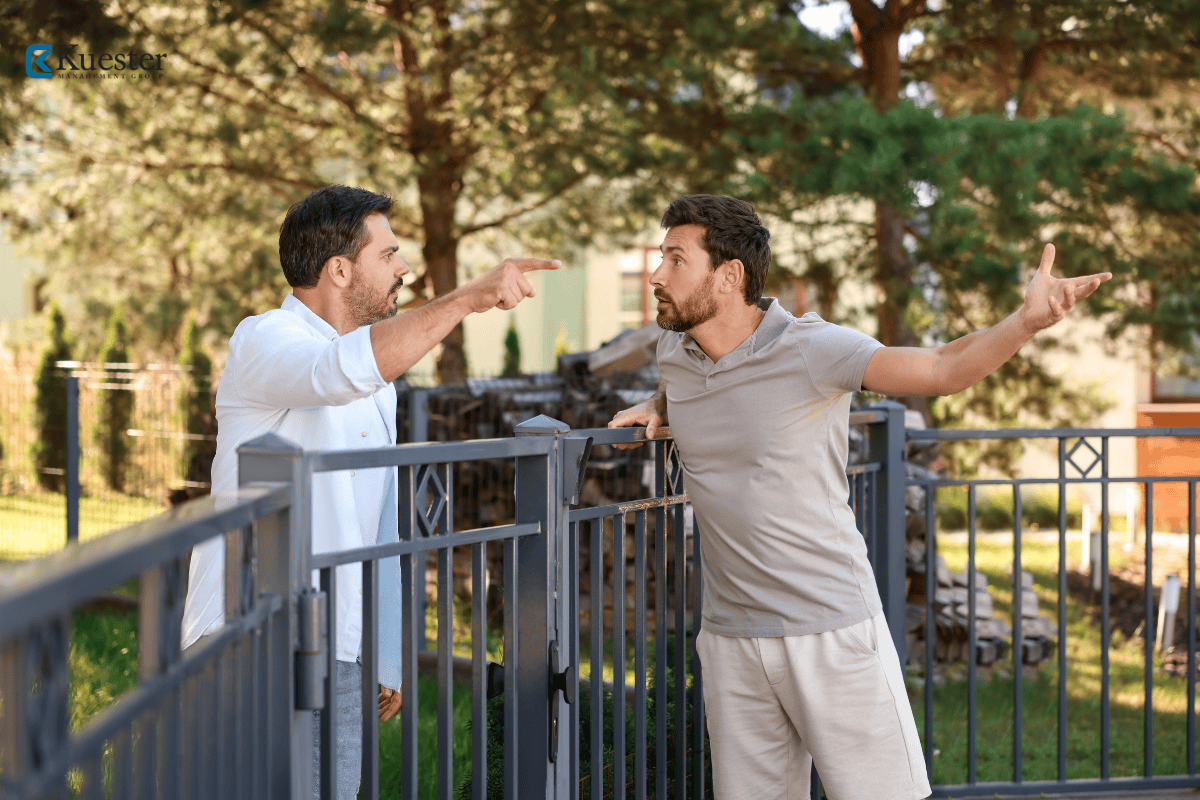
Every HOA board encounters them sooner or later: residents who challenge decisions, dispute rules and regulations, file repeated complaints, or react emotionally to enforcement notices. Difficult homeowner situations are not unusual; rather, they are a normal part of community governance. What matters is not whether conflict happens, but how it is handled.
For volunteer board members, managing tense interactions can be stressful and time-consuming. Without clear processes and support, even minor disagreements can escalate into ongoing disputes that affect the entire community association. Understanding why these situations arise–and how to respond effectively–helps boards maintain order, fairness, and community harmony.
This guide explains the most common types of difficult homeowner situations, why they occur, and practical strategies for handling them professionally and confidently. At Kuester Management, a leading provider of HOA management services in Charlotte, Huntersville NC, Wilmington NC, Myrtle Beach SC, and Fort Mill SC, our team is dedicated to helping HOA boards handle dispute resolution efficiently and empathetically.
What is Considered a “Difficult” HOA Homeowner?
A difficult homeowner is not simply someone who disagrees with the board. Healthy communities allow for differing opinions. A homeowner becomes difficult when their behavior consistently disrupts operations, violates rules, or creates unnecessary conflict.
Examples may include residents who:
- Repeatedly violate HOA rules despite warnings
- Refuse to comply with architectural guidelines
- Send excessive or hostile communications, text messages, etc.
- Challenge every decision regardless of merit
- Engage in neighbor harassment
- Spread misinformation among neighbors or abuse shared social media platforms
- Attempt to intimidate or pressure board members
The defining factor is behavior that prevents the HOA board from doing its job effectively.
Common Types of Challenging Homeowners Boards Encounter
Most boards begin to recognize patterns of disruptive behavior in difficult interactions. While every situation is unique, many challenging residents fall into recognizable categories.
Some of the most common types include:
The Rule Challenger
Questions every rule or insists rules should not apply to them.
The Chronic Complainer
Files constant complaints, often about minor or subjective issues.
The Noncompliant Owner
Ignores notices, deadlines, or repeated violation warnings.
The Aggressive Communicator
Uses threatening or hostile language toward board members.
The Misinformation Spreader
Shares inaccurate claims that create confusion or distrust.
Recognizing these patterns helps boards respond strategically rather than emotionally.
Why Homeowner Conflict Escalate in Self-Managed Communities
Conflict often grows not because homeowner members are unreasonable, but because systems are unclear or inconsistently applied. Self-managed HOA boards are especially vulnerable when procedures are informal or undocumented.
Escalation is more likely when:
- Rules are enforced inconsistently
- Communication styles are delayed or unclear
- Policies are not written or updated
- Boards respond emotionally instead of procedurally
- Documentation is incomplete
Without structure, decisions can appear arbitrary… even when they are justified.
The Impact Difficult Residents Have on Boards and Communities
Persistent conflict does not only affect the individuals involved. It can influence the entire community association’s tone and stability.
Unresolved homeowner disputes often lead to:
- HOA board burnout and resignations
- Increased tension between neighbors
- Delayed decisions and stalled projects
- Legal risks for the association
- Declining homeowner trust
Over time, even a few disruptive situations can damage morale and make it harder for volunteers to lead effectively.
Why Clear Rules and Consistent Enforcement Matter
Consistency is one of the strongest tools an HOA board has. When rules are applied evenly and predictably, homeowners are more likely to accept decisions, even if they disagree with them.
Strong governance depends on:
- Clearly written policies
- Published procedures, rules and regulations
- Documented enforcement steps
- Equal treatment of all residents
Consistency removes the appearance of favoritism and protects the board from accusations of bias.
How Poor Communication Fuels Frustration
Many conflicts begin with simple misunderstandings. If homeowners do not understand why a decision was made, they may assume the worst.
Communication problems often arise when:
- Responses are delayed
- Information is incomplete
- Messages sound defensive or abrupt
- Policies are not explained clearly
Clear, calm, and timely communication prevents many disputes before they start.
Best Practices for Responding to Difficult Homeowners
Handling challenging interactions professionally requires preparation and discipline. Boards that follow structured approaches are far more successful at resolving issues.
Effective strategies for board members include:
- Staying calm and neutral in all communication
- Referencing governing documents instead of personal opinions
- Responding in writing to maintain records
- Using consistent language across all notices
- Avoiding arguments or emotional exchanges
Professional tone and documentation protect both the board and the homeowner.
When and How to Document Issues
Documentation is essential when dealing with repeated violations or confrontational behavior. Written records create clarity and ensure that actions are based on facts rather than memory.
Important documentation may include:
- Copies of violation notices
- Dates of communications
- Photos or inspection reports
- Meeting minutes referencing decisions
- Records of hearings or appeals
Accurate documentation strengthens enforcement and reduces legal risk.
De-Escalating Emotionally Charged Situations
Not every homeowner conflict needs to become a formal dispute. Many tense situations can be defused early with the right approach.
Helpful de-escalation techniques include:
- Listening without interrupting
- Acknowledging concerns without agreeing prematurely
- Repeating key facts clearly and calmly
- Offering next steps instead of immediate conclusions
Often, residents simply want to feel heard. Respectful communication can turn a confrontation into a constructive conversation.
The Role of Hearings, Notices, and Formal Processes

Formal procedures exist for a reason. They ensure fairness, consistency, and legal protection.
Structured enforcement processes typically involve:
- Written notice of violation
- Opportunity to correct the issue
- Formal hearing if necessary
- Decision documentation
- Appeal procedures
Following these steps helps prevent claims of unfair treatment and demonstrates that decisions are based on policy, not personal preference.
Mistakes Boards Should Avoid
Even well-intentioned boards sometimes worsen conflicts unintentionally.
Common mistakes include:
- Responding emotionally or defensively
- Making exceptions without documentation
- Discussing disputes publicly
- Enforcing rules inconsistently
- Ignoring problems until they escalate
Avoiding these missteps helps maintain credibility and authority.
How Professional Management Helps Reduce Conflict
Professional management companies play an important role in handling difficult homeowner situations and de-escalating conflict. They provide structure, neutrality, and experience that volunteer boards may not have.
A company like Kuester Management helps homeowners associations across the Carolinas with the following services:
- Acting as a neutral third party between boards and residents
- Managing violation notices and documentation
- Coordinating hearings and compliance processes
- Ensuring rules are enforced consistently
- Handling communication professionally
This support reduces stress for board members and prevents conflicts from becoming personal.
Legal and Compliance Risks When Conflict is Mishandled
Improperly handled disputes can expose an HOA to serious risk. Even small procedural errors can lead to legal challenges if homeowners claim unfair treatment.
Potential risks include:
- Discrimination claims
- Selective enforcement accusations
- Due process violations
- Defamation concerns
- Financial penalties or lawsuits
Structured procedures and professional oversight significantly reduce these risks.
Long-Term Benefits of Proactive Conflict Management
Communities that handle disputes effectively experience noticeable long-term improvements. Instead of reacting to crises, they operate with stability and confidence.
Proactive conflict management leads to:
- Higher homeowner satisfaction
- More respectful communication
- Faster resolution of issues
- Increased volunteer participation
- Stronger property values
When residents see that rules are enforced fairly and professionally, trust grows across the entire community.
Turn Conflict into Confidence
Difficult homeowner situations are inevitable in any community association, but they do not have to overwhelm your board or disrupt your neighborhood. With clear processes, consistent enforcement, and professional communication, conflicts can be managed calmly and fairly.
If your board is spending more time handling disputes than leading the community, it may be time to explore how experienced HOA management support can provide structure, neutrality, and peace of mind–helping your board focus on building a stronger, more harmonious community.
The team at Kuester invites you to reach out and schedule a consultation anytime. We would love to see if we can be of assistance.
FAQs
What makes a homeowner difficult in an HOA?
A homeowner becomes difficult when their behavior repeatedly disrupts operations, violates rules, or creates unnecessary conflict.
How should HOA boards deal with hostile homeowners?
Boards should remain calm, communicate in writing, follow governing documents, and document all interactions.
What are common HOA disputes with homeowners?
Typical disputes involve rule violations, parking violations, pet waste issues, architectural changes, maintenance responsibilities, fines, and noise complaints.
Can an HOA fine or penalize difficult residents?
Yes, if the governing documents allow it and proper notice and due process procedures are followed.
How should boards handle repeat violators?
By following formal enforcement steps consistently, documenting each violation, and escalating according to policy.
What should HOA boards avoid saying to homeowners?
Boards should avoid emotional, threatening, or personal statements and stick to factual, policy-based communication.
When should an HOA involve professional management?
When conflicts become frequent, stressful, legally complex, or time-consuming for volunteers.
Can HOA management companies handle homeowner complaints?
Yes, management companies often manage communications, complaints, notices, and compliance processes.
How can boards protect themselves from harassment?
By documenting interactions, communicating through official channels, and following established procedures.
How does better conflict management improve community morale?
Fair, consistent handling of disputes builds trust, reduces tension, and creates a more cooperative neighborhood environment.