
If you’re buying a home in a planned community, you may come across two different types of governing bodies: Property Owners Associations (POAs) and Homeowners Associations (HOAs). At first glance, they may seem interchangeable, but they are not the same. Each structure carries different responsibilities, levels of authority, rules, and long-term implications for the community.
Understanding the differences can help homeowners set realistic expectations, evaluate fee structures, and determine which model best aligns with their lifestyle and priorities. It’s equally important for communities considering self-management vs. professional management to understand how governance impacts real estate property values, maintenance quality, and homeowner satisfaction.
This guide breaks down POAs vs. HOAs, including pros and cons, governance structures, legal differences, and how professional management strengthens both models. At Kuester Management, a trusted provider of HOA management services in Charlotte, Huntersville NC, Wilmington NC, Myrtle Beach SC, and Fort Mill SC, our team helps communities evaluate their options. If you are considering how to better manage your existing association, this article offers the clarity you need.
What is a POA?
A Property Owners Association is a broad governing entity that may oversee residential, commercial, and mixed-use property within a geographic boundary. POAs often coordinate large-scale planning, shared infrastructure, and community-wide assets.
POAs can manage:
- Public or private roads
- Parks, recreational areas, or trails
- Clubhouses or community amenities
- Business districts
- Entire master-planned communities
POAs often cover a wider scope compared to HOAs, making them more governance-focused than enforcement-focused.
What is an HOA?
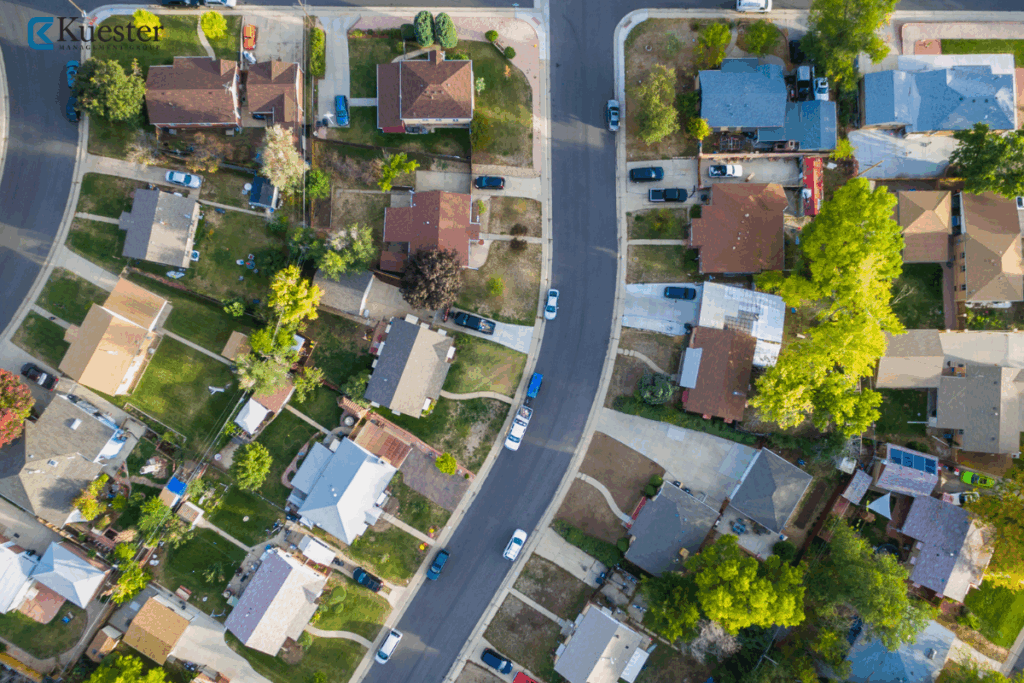
A Homeowners Association is a nonprofit organization created by a developer and turned over to homeowners once a community is built. HOAs enforce rules outlined in the Covenants, Conditions & Restrictions (CC&Rs) and oversee community standards.
HOAs typically manage:
- Architectural guidelines
- Lawn/landscape standards
- Home exterior requirements
- Pools, clubhouses, and other common areas
- Community events and communication
- Assessments, budgets, and reserves
In short, HOAs oversee the day-to-day quality, maintenance, and aesthetics of the neighborhood.
Key Differences Between POAs and HOAs
Below is a helpful overview of how the two entities differ:
Scope of Authority
- POA: Broad, community-wide governance; may include commercial and city-like functions.
- HOA: Specific to residential neighborhoods.
Applicability
- POA: Applies to all property owners in the defined region.
- HOA: Applies only to homeowners within a particular residential community or subdivision.
Rules and Regulations
- POA: Focuses on policies and land use; rules may be looser.
- HOA: Enforces strict appearance, maintenance, and architectural rules.
Financial Structure
- POA: Larger budgets covering infrastructure and mixed-use development.
- HOA: Budgets specific to community amenities and maintenance.
Governance Structures
HOAs
HOA boards are made up of elected homeowners who volunteer their time to enforce rules, manage budgets, and oversee community decisions. Roles typically include:
- President
- Vice President
- Secretary
- Treasurer
- At-large members
POAs
POAs may include representatives from:
- Residential communities
- Condominium associations
- Commercial entities
- Business owners
POAs function more like umbrella organizations with wider decision-making authority.
What Each Association Controls
Although POAs and HOAs are both forms of community governance, the scope of what they oversee can be very different. Understanding these distinctions helps homeowners know where to direct concerns, how decisions are made, and what responsibilities fall under each organization’s authority.
What HOAs Typically Oversee
Homeowners Associations focus on the day-to-day appearance, standards, and operations within a specific residential neighborhood. Their responsibilities are usually centered around maintaining consistency, property values, and community harmony.
Common areas an HOA controls include:
- Home appearance and architectural modifications
- Landscaping and yard maintenance standards
- Trash and recycling regulations
- Pet policies and restrictions
- Parking rules and vehicle limitations
- Pool, clubhouse, and common area policies
- Community-wide maintenance and upkeep
These rules are designed to keep the neighborhood looking uniform and well-maintained, ensuring long-term property value protection.
What POAs Typically Oversee
Property Owners Associations operate on a broader scale. They often govern entire master-planned communities that can include multiple neighborhoods, commercial areas, or mixed-use developments.
POA oversight may include:
- Master-planned infrastructure and long-term development
- Common roads, stormwater systems, and community signage
- Regional amenities such as parks, trails, or recreation centers
- Coordination and management of multiple HOAs within the same umbrella community
POAs act more like governing bodies for large-scale community planning, ensuring consistency and quality across broader shared spaces rather than individual homes.
Financial Considerations
When comparing HOAs and POAs, one of the biggest differences homeowners notice is how fees are structured and what they cover. While both types of associations collect dues, the scale and purpose of those funds can vary significantly.
HOA Fees
HOA fees typically support the maintenance and operation of a single residential community. These dues often cover services such as landscaping, amenity upkeep, community insurance, and ongoing repairs. In many neighborhoods, HOA fees remain relatively modest, but they can increase in communities with extensive amenities such as pools, gyms, gated security, or golf courses.
Because HOAs operate on strict budgets, assessments and fee changes must follow established procedures–often requiring board approval and, in some cases, homeowner votes. This ensures transparency and financial accountability.
POA Fees
POA fees usually support much larger infrastructure needs. Instead of maintaining just a neighborhood, POAs may manage master-planned roadways, stormwater systems, signage, and regional parks or recreation facilities. As a result, POA dues can apply even to property owners who are not part of a traditional residential subdivision. These fees may also fund large-scale improvements or long-term capital projects across a broad geographical area.
Comparing Financial Scale
Both HOAs and POAs must maintain healthy reserves and practice long-term financial planning to ensure their communities remain functional and attractive. However, POA budgets tend to be more complex due to the size and scope of the areas they manage, whereas HOAs focus on more localized, community-specific funding needs.
Rules and Regulations: How Strict Are They?

When it comes to rules, HOAs and POAs take very different approaches. HOAs are generally much more detailed in what they regulate because their primary goal is to maintain neighborhood appearance, cohesion, and real estate property values. This often means homeowners must follow specific guidelines related to paint colors, siding materials, landscaping choices, fence designs, and even parking or vehicle restrictions. These rules can feel strict, but they help keep the community uniform and well-maintained.
POAs, on the other hand, tend to focus on broader, community-wide governance. Instead of dictating the look of a home or yard, they manage larger issues such as zoning, roadway policies, public area use, and regional maintenance. Their rules are usually less specific.
However, some master-planned communities include both a POA and multiple HOAs, in which case the POA sets broad standards while each HOA enforces more specific rules.
Pros and Cons of HOAs
Homeowners Associations are designed to create structured, well-maintained communities, but like any system, they come with both advantages and drawbacks.
Pros of HOAs include:
• Protecting property values through consistent standards
• Providing well-maintained amenities such as pools, parks, and clubhouses
• Faster resolution of maintenance or community concerns
• Stronger neighborhood cohesion through shared expectations
• Clear guidelines for architectural changes, reducing disputes
Cons of HOAs include:
• Fees that may be higher depending on the level of amenities
• Rules and restrictions that some homeowners feel limit personal freedom
• Potential conflicts over enforcement of regulations
• Volunteer boards that may become overwhelmed or inconsistent without professional support
Pros and Cons of POAs
Property Owners Associations often manage much larger areas than traditional HOAs, which can create unique advantages for homeowners.
Pros of POAs include:
• A broader scope that allows for coordinated planning across multiple neighborhoods
• Efficient management of mixed-use areas that may include residential, commercial, and recreational spaces
• Improved regional infrastructure such as roads, stormwater systems, parks, and signage
• More uniform development and long-term planning across large communities
Cons of POAs include:
• Rules and governance structures that may be less familiar or more complex for homeowners
• Limited day-to-day influence for individual property owners compared to a neighborhood HOA
• Fees that may support improvements not directly tied to a homeowner’s immediate surroundings
• Larger organizational size, which can feel less personal or responsive
When a Community Benefits from a POA vs. an HOA
HOAs and POAs each serve different purposes, and understanding when one structure works better than the other can help communities plan effectively. For traditional residential neighborhoods, an HOA is often the best fit. HOAs work well in areas where maintaining a consistent appearance is important and where amenities like pools, clubhouses, and playgrounds require ongoing care. Their smaller scope allows for more direct involvement and tailored rules that support neighborhood identity.
POAs, on the other hand, are ideal for larger or more complex developments. Master-planned communities, mixed-use areas, and neighborhoods that need coordinated land-use oversight often benefit from the broader authority a POA provides. POAs can manage infrastructure, parks, and roads in a way that ensures harmony across multiple residential and commercial zones.
How Professional Management Improves Both POAs and HOAs
Professional management can dramatically improve how both HOAs and POAs operate. Many problems homeowners encounter, such as unclear communication, uneven rule enforcement, rising dues, or ongoing conflict, often arise because volunteer boards simply don’t have the time, training, or resources to manage everything effectively. Bringing in experienced support can transform the way a community functions.
Recognized as a trusted HOA management company, Kuester Management Group can help reduce these issues by providing:
- Transparent financial management and budgeting
- Vendor oversight and structured maintenance scheduling
- Improved communication portals and information systems
- Consistent, fair covenant enforcement
- Expert guidance on governing documents and state laws
- Leadership training and onboarding for board members
- Conflict resolution assistance and homeowner support
Kuester Management Group specializes in supporting associations across the Carolinas, helping both POAs and HOAs operate with greater efficiency, clarity, and long-term stability.
Take the Next Step Toward a Stronger, More Organized Community
If your HOA or POA is struggling with communication, enforcement, budgeting, or overall governance, you don’t have to navigate those challenges alone. Kuester Management Group provides the expertise, structure, and support that volunteer boards need to operate smoothly and confidently.
No matter if you’re refining your governing processes or looking to enhance community satisfaction, our team is here to help. Contact Kuester today to discover how professional management can elevate your community’s success.
FAQs
What is the main difference between a POA and an HOA?
A POA governs a broad area and may include commercial and residential property, while an HOA governs only a specific residential community.
Which has more authority, a POA or an HOA?
A POA typically has broader geographic authority, but an HOA has more control over homeowners’ daily rules and property standards.
Do POAs or HOAs have stricter rules?
HOAs tend to have stricter appearance and maintenance rules, while POAs focus on larger-scale issues.
Are POA fees cheaper than HOA fees?
Not always; POA fees may be lower or higher depending on the scale of infrastructure and amenities.
Can a community have both a POA and an HOA?
Yes. Many master-planned areas operate with both structures.
Who enforces rules in a POA vs. an HOA?
POAs enforce regional policies; HOAs enforce community-specific covenants.
How does each association affect property values?
HOAs often strongly influence curb appeal and maintenance–key factors in property value–while POAs impact broader community aesthetics and usability.
Which structure is better for homeowners?
It depends on whether the homeowner prioritizes strict standards (HOA) or broader community governance (POA).
Can a POA or HOA hire a professional management company?
Yes, both can, and many should for improved compliance, communication, and maintenance.
What should homeowners consider before buying into a POA or HOA community?
Review the governing documents, fees, rules, amenities, and management style to ensure alignment with your lifestyle.